Monday, June 1, 2015

Up Close and Personal with AUSTRALIA'S FIRST FAMILIES OF WINE

At first, the concept made me cringe. "Speed dating" with Australian wine producers? Ugh. Yes, it reminded me of a few actual cringe-worthy speed dating events in my past—but at trade tastings, I like the freedom to bounce around, to spend as much or as little time at a table as I'd like, and to leave before a winemaker launches into a dry spiel of how many months in what percentage of what age of what kind of oak.

But it ended up being a ball (save for the Pavlovian stress to hurry up and move tables when the bell rang,) and it was a great way to get an incredible overview of Australia's quality wine.

Australia's First Families of Wine is comprised of twelve winemaking families that have been crafting wine all over Australia for generations. They believe that their legacy and high standards of winemaking should earn them the same respect and renown as the other standout wine regions of the world like Bordeaux, Burgundy, and Napa. But with one exception (Penfolds Grange Hermitage,) Australia is mostly associated with punch-you-in-the-jaw alcoholic Shirazes and oaky-butter-bomb Chardonnays, or cheap-and-cheerful "critter" wines (named for the animals that dot their labels,) not elegant and pedigreed world-class stunners.

And that is just plain WRONG.

Eleven of the twelve families were on hand recently in New York City to share some wines from their personal cellars—some current releases, many not—and I had the very atypical experience of loving almost every single wine poured. (Normally my notes are dotted with the occasional star, but I had to stop drawing my stars after I had done six in a row.)

So join me for a moment, won't you, as I share with you my "speed dating" journey, (without the $!#*@% ringing bell.)

WAKEFIELD — Clare Valley, South Australia (with its heralded Terra Rossa soil.)
Self-described as "proudly New World winemakers but obsessed with Old World finesse."

2012 Wakefield St. Andrews Shiraz: Single vineyard. Spicy, smoky nose, with muddled cherry. Very silky and smooth.  ~$65
2009 Wakefield The Visionary Cabernet Sauvignon: Great black currant, blackberry nose. Rich and tasty, some tartness at finish. Bright vibrant cherry fruit on palate with balancing acidity and soft tannins. ~$200

BROWN BROTHERS — NE Victoria, slopes of Australian Alps.
Ross Brown says the goal of the family is to make "fine and elegant" wines. 

2010 Brown Brothers Patricia Chardonnay, Yarra Valley: Yellow apple and kiwi on the rich nose. Leaner in the mouth, minerally and citrus notes. Definitely trying to move away from the oaky/buttery style, Ross said, "we don't want oak to be a flavor. We want it to be a complexor." ~$40
2000 Brown Brothers Patricia Sauvignon, King Valley: Amazing nose, cassis, sweet cigar box, buttered toast, damp earth. Smooth, fine and elegant (see above, check!) Woody feel, herbs, and bright cherry to balance it out. ~$60


TYRRELL'S — Hunter Valley, New South Wales.
Another of Australia's prominent wine families, Tyrrell's has racked up numerous awards over the years. 

2010 Tyrrell's Wines Vat 1 Semillon: Varietal nose of wax, lanolin, and sour cream. Lovely white peach in the mouth. Clean and crisp. Winemaker Bruce Tyrrell said, "What you see there is what came out of the vineyard." ~$50
2011 Tyrrell's Wines Vat 9 Shiraz: Light red fruits and aromatic violet and rose florals. Medium-bodied, with zingy acidity, and bright, almost underripe fruit. ~$50

CAMPBELLS — Rutherglen, Victoria.
Colin Campbell is the current patriarch of this family winery dating back 145 years.

2006 Campbell's The Barkly Durif, Rutherglen: sumptuous violets and dark cherry perfume. Rich and smooth with blue and black fruits on the palate and integrated tannins. ~$55
NV Campbells Rutherglen Muscat: Dark copper color, very dense. Sweet cigar leaf, tangerine peel. Forest floor balances out the sweetness. ~$20/375ml bt.
NV Campbells Merchant Prince Rare Muscat: almost opaque molasses color. Incredibly viscous. Just stunning! Herbs, burnt caramel, bit of balsamic, great acidity. WOW. ~$85/375 ml bt.


YALUMBA — Eden Valley/Barossa Valley, South Australia.
 Founded in 1849, Yalumba is Australia's oldest family-owned wine company.

2012 Yalumba The Virgilius Eden Valley Viognier: Meyer lemon, green leaves, panna cotta, ginger, stone fruit, very spicy. Attractive. ~$32
2012 Yalumba The Signature: About 50/50 Cabernet Sauvignon and Syrah. Very purpley, with loads of complex fruit. Warm and spicy, good acidity, soft, silky tannins. Rich and flavorful but finish lifts it. Doesn't smack you. Still a baby! Try again in 10, 20 (30?) years. ~$50

HENSCHKE — Eden Valley, South Australia.
Fifth-generation winemaker Stephen Henschke brought along some gems, the Cab named after his father, and a ten-year-old bottling of the iconic Hill of Grace.

2010 Cyril Henschke Cabernet Sauvignon: spicy, smoky nose, with plum, black pepper, violets, herbs, and cassis. Bright fruit, smooth mid-palate, components very well balanced, with a delicious and spicy finish. 84% Cabernet Sauvignon, 13% Cabernet Franc, 3% Merlot. ~$150
2005 Henschke Hill of Grace Shiraz: Aromas of baked red fruits, very smoky, sage and black pepper notes. ("Very Eden Valley aromas," agreed Stephen.) Somewhat savory note, like a tomato/oregano sauce. Just amazing—elegant, with fine tannins. Everything blends together in a warm bath of deliciousness. YUM. (Not your "big, ripe, jammy" Shiraz.) More, please. ~$600

DE BORTOLI — Victoria and New South Wales.
The De Bortoli family immigrated to Australia from Northern Italy in 1928, and their wines combine Italian family values and Aussie terroir. 

2014 De Bortoli Yarra Valley Estate Grown Pinot Noir: Verrrry berrrry nose. Full-bodied style, with very tasty complex fruit and soft tannins. Clean and delicious. Minerally finish with integrated acidity. Whole bunch fermentation. ~$25
2011 De Bortoli Noble One Botrytis Semillon: The Noble One wines were created in 1982, inspired by the 1975 Ch. Coutet Sauternes. Botrytis and caramel on the nose, nice acidity to balance, so a clean finish (not cloyingly sweet.) Kumquat, other citrus, bit of caramel. Lovely. ~$27/375 ml bt.

JIM BARRY WINES — Clare Valley, South Australia.
The late Jim Barry was an iconic figure in Australian winemaking. His son Pete Barry was on hand to share some of Clare Valley's star Rieslings.

2014 Jim Barry "The Lodge Hill" Dry Riesling: wild white flowers and lime zest on the nose, in the mouth, those flavors are balanced by minerality and a spicy finish. Very dry and clean. ~$17
1999 Jim Barry "The Lodge Hill" Dry Riesling: I can say I've never had a 16-year-old Clare Valley Riesling before... but now I want more! Medium-gold color, toasty, honey nose. Lanolin, petrol, with marmalade on finish. Still good acidic backbone. Wowzers. ~$30


D'ARENBERG — McLaren Vale, South Australia.
D'arenberg was founded by the Osborn family, and wins the Cheeky Award hands down. Winemaker Chester Osborn (who has a matching eclectic fashion sense) even brought props to help illustrate the way his wines get so creatively named. 

2012 d'Arenberg The Money Spider Roussanne: Named for the tiny "money spiders" that mysteriously covered the first crop of the 2000 vintage (believed to bring good luck via money.) Green and herby nose, delish fruit mid-palate, lemon curd, straw, key lime pie. Slurp. ~$25
2006 d'Arenberg The Ironstone Pressings: 70% Grenache, 25% Shiraz, 5% Mourvedre. "Only foot-trod once... yeah, we pretty much left it alone," says Chester. Incredible licorice on the nose, with smoke and cigar ash. Kind of a dry-aged-beef-char thing. Juicy but not overripe. Long (oddly lip-numbing?!) finish. ~$65

MCWILLIAM'S — Tumbarumba/Hilltops, New South Wales.
This six-generation company makes a variety of well-regarded, diverse wines. Scott McWilliam brought a pair of wines at a great price point.

2013 McWilliam's Appellation Tumbarumba Chardonnay: Nose of lemon and fresh herbs, with a light toastiness on the very long finish. Minerally and finessed. ~$25
2012 McWilliam's Appellation Cabernet Sauvignon: Rose petals! on the nose. Very herby and green, with berries—somewhat zingy and fussy at the moment, but like a kid in the "Terrible Twos," I think it'll evolve nicely. ~$25

TAHBILK — Nagambie Lakes, Victoria.
The oldest family-owned winery in Victoria, Tahblik also boasts a unique microclimate. Alistair Purbrick brought us a pair of mind-blowing Marsannes (one of which made me break out my stars again.)

2008 Tahbilk Museum Release Marsanne: A totally "YUM" nose of butter, marzipan, toast, cream puff, and honeysuckle. Wow. This drinks like a warm summer's day feels. Excellent weight, good length. Wow. Stars all over the page. ~$22
2006 Tahbilk 1927 Vines Marsanne: Intense perfumey nose, white and yellow flowers, warm and rich, viscous, sour lemon. Yet seems a wee bit schitzo as it's beautifully fresh and clean on the palate. Even though this was two years older than the prior wine, it tasted younger (due to totally different winemaking styles.) ~$35

#       #       #

Wineaux, I tell you that even writing this post made me revisit my bliss and across-the-board delight at what these families had to offer. (So much so that I just ordered half a case of the '08 Tahbilk Museum Marsanne so I could prolong my joy even further!) And while the delectable Hill of Grace is up there, most of these astonishing wines are relatively affordable. It certainly is worth it to give Australia's fine wines the chance to measure up with the rest of the world's. 

Cheers!

N.B. Not all of the above wines are readily available in the U.S., but I doubt it will take long to see more of them on our shores.


Friday, May 22, 2015

IMPRESS YOUR FRIENDS WITH VDNs!
(VDNs = Vins Doux Naturels)

I fully admit that until recently, in my tiny Wineau mind, VDNs seemed the poor man's Sauternes or Madeiras—sweet dessert wines with little identifying character, fine in a pinch on a sparse wine list.

And now, my tiny Wineau mind IS BLOWN.

"Aha," you ask, "is this another article about how technology and advances in winemaking techniques have re-shaped a wine region?" Nope. The Roussillon in southern France (where VDNs are made) is a very old, historic region, with little-to-no modern innovation.

"Then is this about the discovery of a 'new' wine variety that truly shines in the locale?" Nope. There are over 20 classic red and white grapes used in making VDN, always have been.

"So what's the big deal?" You ask in exasperation. Calmez-vous, my dear Wineaux, and read on.

Like the Purloined Letter (except without the Poe-ian mystery,) Vins Doux Naturels are kind of hiding in plain sight. These are fortified sweet wines with such complexity of character, acidic balance, and relatively low alcohol that they are a revelation, especially when paired with food. And boy, do they pair with all kinds of food: from ceviche to Beef Bourguignon to a fig and hazelnut poundcake.

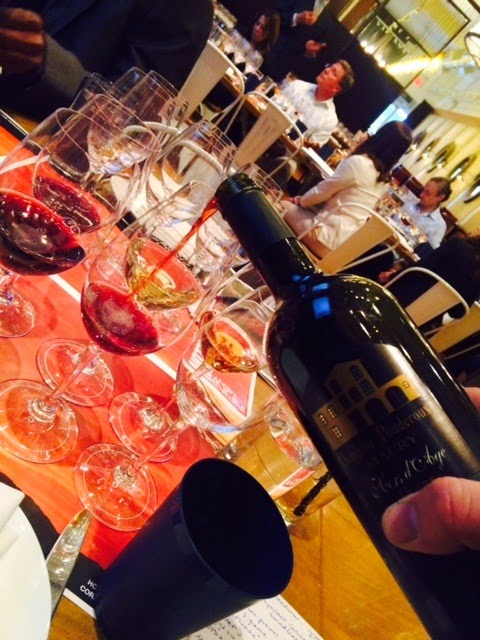
At a recent tasting led by Caleb Ganzer, sommelier at Compagnie de Vins Surnaturels in NYC, I got to taste six very different VDNs paired with a range of dishes at Corkbuzz Wine Studio. The entire experience left me gobsmacked, which doesn't happen very often. I rushed home to start writing, for as Caleb said, "No one's probably going to stumble on these by themselves—they need to be introduced to VDNs by someone in the know." So, as someone now in the know, here you go!

2009 AOP VDN Banyuls, Domaine de la Rectoire, Cuvee Léon Parcé: Very dark cherry/ruby color. Crushed raspberries, spice, rose petal perfume on the nose. Very tasty! Black cherry, raspberry, cigar leaf, sage, loooong finish. You sense the elevated alcohol, but it's integrated and smooth. Fresh and cheeky, with good acidity and minerality. 70% Grenache Noir, 20% Grenache Gris, 10% Carignan, from 50+ year old vines. ~$45/500ml

2012 AOP VDN Muscat de Rivesaltes, Château Les Pins: Medium gold color. Nose of litchi, honeysuckle, orange marmalade, and pear; those notes with peach, chamomile, and spice (white pepper, cinnamon,) on the palate. Delish! Noticeable sugar but good acidic balance. Verrrry spicy. 50% Muscat des Petit Grains, 50% Muscat d'Alexandria ~$18

2005 AOP VDN Rivesaltes Ambré, Domaine Singla, Heritage Du Temps: "Ambré" = started as a white wine and allowed to oxidize. Medium marmalade/copper color. Brittle and taffy on the nose, brown butter, liquid caramel, bit of spice, dark honey, carrot cake. Romantic and luxurious. The "sweetest" so far, but again, the acidity elevates it. 100% Macabeu. ~$N/A but around 45-50.

2000 AOP VDN Banyuls Grand Cru, L'Etolie: Medium-plus tawny brick color. Raisin, fig, prune elements, with a smoked meat/iodine savoriness. Pairs incredibly well with savory foods. Great balance of fruit/structure/sweetness. Finessed and complex. A fave. 75% Grenache Noir, 15% Grenache Gris, 10% Carignan, aged 10 years in old oak. ~$45

AOP VDN Maury, Domaine Pouderoux, Hors d'Age: Medium maroon-brown color. Light dried fruit, minerals, florals. Part oxidized, part reduced. Outrageous combination of flavors, smooth, pairs wonderfully with an array of foods, long finish and rich character. 100% Grenache Noir, aged 15 years. ~$40

1974 AOP VDN Rivesaltes Ambré, Constance et Terrassous: Medium brownish dark copper with red highlights. Very sherry-like nose, bit of bourbon, mountain florals, toasted nuts, caramel, toffee, dried fig. Whisky feel. Zingy acidity, but smooth and luxurious. Outrageously long finish. Somewhat Madeira-like. My notes say, "This is my boyfriend. I love him." 50% Grenache Blanc, 50% Grenache Gris. ~$150.


#     #     # 

Pique your interest? I hope so. How amazing to sip wines that are fortified and sweet—but are not necessarily "dessert" wines. They also blend well in a range of cocktails! VDNs will last quite a while after opening, so you can sample them with multiple dishes over time. And considering what you get in return, they are excellent values. So seek out some VDNs, and you will definitely impress your friends.

Cheers!


Saturday, May 2, 2015

SPRINGTIME IS CHIANTI TIME!

Oh these glorious days, when winter's freeze at last releases its grip, the blooms appear in a riot of color, and afternoons seem to laze along under the warm sun. It's Spring! While we are all certainly rejoicing, many Wineaux may stumble over a little tricky problem; what wine goes with Spring?

Summer is easy: something light and refreshing, like a New Zealand Sauvignon Blanc, a Muscadet from the Loire, or a lightly spritzy Txakoli from NW Spain. Dead of winter? An inky Tannat from France, a Spanish Monastrell, or a Portuguese red blend will warm you up. But for Spring, you seek a middle ground—maybe a red that's not too overpowering, with good acidity to lift it, and elegant floral aromatics and fresh berries... LIKE CHIANTI!

Sure, Chianti makes a lot of us think of Hannibal Lecter and fava beans, or cheapo straw-wrapped bottles of yore, but this Sangiovese-based red from Tuscany can be delicious, food-friendly, and a perfect sipper during the Spring.

At a recent tasting sponsored by the Consorzio Vino Chianti, I had to wade through some head-scratchers and a couple of underwhelming offerings, but it was totally worth it to find a few real gems that were intoxicating, delicate, and delicious.

From Azienda Agricola Lanciola, the 2013 Az. Agr. Lanciola Chianti DOCG had a mild nose, but it had varied elements of florals and merde (or whatever "merde" is in Italian,) and was tasty and very quaffable. ~$15. The 2012 Az. Agr. Lanciola Chianti Colli Florentini DOCG had an exuberant nose of floral perfume and loads of blueberry, and was interesting on the palate, light but complex, with black fruits. ~$15. And the 2011 Az. Agr. Chianti Colli Florentini DOCG Riserva had another great nose of overripe berry salad and an appealing funk, still brightly acidic but balanced. ~$25.

I also enjoyed the 2010 Castello del Trebbio Chianti Rùfina DOCG Riserva "Lastricaro" for its spicy, woodsy notes, and a nice cherry flavor, with good tannins—a solid, well-balanced effort. ~$35. 

The 2011 Colognole Chianti Rùfina DOCG "Colognole" was made from 100% Sangiovese, had a nose of merde-y perfume, with cheeky red fruit on the palate, and had a good balance of flavors and structure. ~$25. And the 2009 Colognole Chianti Rùfina DOCG Riserva "Riserva del Don" was also 100% Sangiovese and had an incredible nose—so perfumey! ~$35.

I've long been a fan of the Pieve De' Pitti wines, and Caterina Gargari was on hand to share some fantastic offerings: the 2011 Pieve De' Pitti Chianti Superiore DOCG "Cerretello" had a luxe warm nose of berry/cherry fruit and spices which blossomed in the mouth, grippy, with good balance. ~$NA. And the 2008 Pieve De' Pitti Chianti Superiore DOCG "Cerretello" that she brought (in magnum—the last one she had!) had a nose of perfume and earth, was rich and voluptuous in the mouth with nice acidity, evolved, yet very quaffable. ~$NA. (Not available yet in the U.S.)

The 2012 Tenuta San Jacopo Chianti DOCG "Poggio ai Grilli" had great rose petals and red fruit on the nose, and was delish and tasty on the palate. ~$17. And the 2011 San Jacopo Chianti DOCG Riserva "Poggio ai Grilli" had amazing florals on the nose, and was full of rich blue and black fruits, violets, and was super smooth on the finish. ~$25.

Out of the 2013s I'd tasted, the one that presented the best was the 2013 Tenuta San Vito Chianti Colli Fiorentini DOCG "Darno," which had a gorgeous nose of berries and rose petals. But like most of the 2013s, it exhibited an unusual errant "spritz," a little secondary fermentation or something, perhaps (see "head-scratchers" above)—one producer speculated that as these were bottled quite recently it was just the nature of the wine settling down. This was not integrated yet by any means, but the nose speaks of potential… ~$NA. (Not available yet in the U.S.)

The Castelvecchio offerings were all solid, but my favorites were the 2011 Castelvecchio Chianti Colli Fiorentini DOCG "Il Castelvecchio," 90% Sangiovese, 10% Merlot, which was very funky with compote fruit, but bright and zingy with good balance ~$15, and the 2010 Castelvecchio Chianti Colli Fiorentini DOCG Riserva "Vigna la Quercia," 90% Sangiovese, 10% Cabernet Sauvignon, with spice box, good fruit, depth and structure (though I wondered if the Cab overwhelms a bit in the blend.) Still, tasty! ~$20.

Finally, the 2012 Tenute di Fraternita Chianti DOCG "Priore," a blend of 90% Sangiovese and 10% Cabernet Sauvignon, was grippy and spicy, with earth and dirt elements, but smooth with good integration ~$17, and the 2012 Tenute di Fraternita Chianti DOCG Riserva "Ser Mariotto" was stunning, very smooth and velvety. Gorgeous notes (like the cassis from the Cab,) balanced the earth and florals, grippy and just plain delicious. ~$NA. (Not available yet in the U.S.)

Yes, you might be frustrated with the fact that a lot of my favorites are still looking for U.S. distribution, but these relatively young producers are fighting for their representation by showcasing such lovely wines. To contrast, a very widely-distributed producer, Ruffino, was pouring two wines—neither which I found very appealing, to be honest. (See "underwhelming" above.)

You'll probably have to rely on the recommendations of your merchants and sommeliers to find the true gems, but definitly think of a 2009-2012 Chianti the next time you're stymied at what to drink this Spring. Those florals, fruit and earth notes, and pitch-perfect acidity will help you toast the change in season.

Cheers!


Friday, April 24, 2015

ODE TO BUBBLY: The Sparkling Wines of Gruet

If I had my druthers, I'd drink Champagne all day long, every day. Well, druthers AND a large pocketbook, as Champagne can be a very expensive habit. Lucky for me, there are a large number of American producers who make delicious sparkling wine in the Mèthode Traditionelle—aka the Champagne method—and their wares encompass the range of Champagne styles and brilliance quite well while being kinder on the wallet.

A particular personal favorite is Gruet—their NV Brut made one of my very first "Top 20 Under $20" lists. Located in Albuquerque, New Mexico (wait, what, NEW MEXICO?!) this family-run winery has been producing award-winning sparklers since their first release in 1989. You may still be trying to wrap your brain around the concept of quality wine from New Mexico, but the American Southwest has many characteristics of fine-wine growing regions, namely good soils and high-elevation vineyards which cool greatly overnight so the grapes don't ripen too much. (Check out my roundup of nearby Arizona wineries here and you'll get an idea of what the area has to offer.)

While I've found the Gruet Brut and the Gruet Rosé in wine shops all around the country, some of their other offerings are less widely distributed, so when I got an opportunity to purchase a mixed case, I jumped on it. I invited some friends over to taste the array with me, and we had an eye-opening experience getting acquainted with some of the styles of Gruet bubblies.

As kind of a "baseline," we began with the NV Gruet Brut. Everyone agreed it was a solid offering, with notes of green apple, a little yeastiness, and lemon/grapefruit citrus. A blend of 75% Chardonnay and 25% Pinot Noir, it remains a fave go-to sparkler. ~$16.

Next up was the NV Gruet Rosé. 100% Pinot Noir, with a beautiful salmon color. Lots of strawberry on the nose, with raspberry in the mouth, and some herbs and florals to round it out. There is 2% still Pinot Noir added to the bottle, I imagine to add a little depth of flavor… whatever the reason, it works, and suddenly it seemed everyone had a new favorite go-to. A little cheekier, a little sexier, for ~$18.

Our third bottle was the NV Gruet Sauvage, which is 100% Chardonnay, and made in the driest, Brut Nature style. We all agreed there was a kind of dryer sheet/mineral soap-iness character which took some getting used to. Definitely steely and crisp, with mountain florals and lemon peel. Maybe not the universal favorite of the eve, but people kept coming back to it, intrigued. ~$20.

Our first vintage offering was the 2010 Gruet Blanc de Blancs, also 100% Chardonnay ("Blanc de Blancs" basically means "white from whites," so only white grapes are used, i.e., our old friend Chard.) This wine spent three years on the lees, and the subsequent richness and roundness shone through in the notes of Gala apple, toastiness, and its creamy expression. We started to go a little bonkers for this one, no lie. When you realize a vintage Champagne is going to run you generally around $80-100, this baby is even MORE attractive at ~$25. Boo-yah.

Now, the dosage levels of Champagne are varied and confusing, with the wide ranges of allowed residual sugar and the nomenclature, so we'll just leave it that Extra Dry is smack in the middle, with higher residual sugar than a Brut, but not necessarily sweet-tasting. You'll sense the ripeness of the fruit, and a higher viscosity, but as Champagne's acidity is so bright, it can be balanced in a glorious way. And so it follows that a couple of minds were blown by the NV Gruet Extra Dry. Again 100% Chardonnay, and bottle aged a minimum of 18 months, it had notes of marzipan, white peach, rose petals and honeysuckle. ~$16. (I really wish I could've gotten my hands on the Gruet Demi-Sec, which would have had still more residual sugar, but this was certainly an eye-opener for those in the group who would usually shy away from a "sweeter" offering.)

Finally, the Tête de Cuvée, the 2007 Gruet Gilbert Gruet Grand Reserve. Named after the winery's founder, this is a 100% Chardonnay from the property's oldest vines. They use free-run juice, and age the still wine after its first fermentation in French oak barrels. It spent six years aging on the lees, and only 600 cases were made. And it was everything you'd hope from a jewel in the crown: toasty brioche, beautifully yeasty, notes of vanilla, taffy, baked yellow apple, lemon, and mountain florals. Complex and hedonistic. So amazing, I want a whole case all to myself (to drink all day long, every day.) And get this… it's only $43. What the what?!?!

This tasting only confirmed what I'd long thought about Gruet: very high quality across the board, a consistent Brut "house style," and vintage offerings that were elevated and nuanced. Kinda like a good Champagne… at a fraction of the price. As I said, the Brut and the Rosé have wide availability, and stores that carry them may be able to get you some of the rest of the portfolio. But you can also purchase through the winery's website here. I hope to get the chance to visit New Mexico in the near future and see the Gruet operations first-hand, but until then I remain very, very thankful that I still have a few bottles left in my case!

Cheers.


Monday, March 30, 2015

GRANDES PAGOS de España ~ Spain's Single Estates

It might seem obvious that, in general, the smaller the parcel of land from which a wine is sourced, the higher the quality. Wines labeled with a large region tend to be entry-level, and then the more telescopic you go—from large region to mid-size region to small region to sub-region to single vineyards—the quality expands exponentially.

In Spain, for many years, large conglomerate companies oversaw wine production, sourcing grapes from areas all over the country. It wasn't until 2000 when a small group of producers stood up for their single vineyard/single estates (called "pagos") and founded what has become the Grandes Pagos de España. This is not a commercial group—they have different importers, for example—but they do share technical expertise, winemaking knowledge, and they've banded together to promote premium, quality wine from all over Spain.

During a recent tasting sponsored by the group, I got to sample some old favorites and meet some new ones. The wide range of styles, sub-regions, and grapes was a little muddying perhaps, but the fact remains that most of these wines were fantastic examples of craft and terroir.

2007 Cava Gramona III Lustros: medium-minus gold color. Warm, toasty almond. Lemon zest. Very bright, lots of minerality. Reflects its gravelly/sandy soils. Zippy acidity on the light yet long finish, gets creamier. ~$45.


2012 Chivite Colleción Blanco: bright medium gold color. Great nose—taffy, oak, baking spices, baked yellow apple. Viscous, good balancing acidity, long finish. Not terribly complex, but overall nice structure and flavors. Bit of tropical fruits come in at finish. 100% Chardonnay, 11 mo. in French oak. ~$50.

2013 La Miranda de Secastilla Blanca: green melon, lemon, celery, interesting. Very tart, green and clean, bit of ripeness at the finish. I like. ~$20.

2013 Cérvoles Blanc: funky nose, overripe honeydew melon. Nice tang, quaffable, balanced, VERY spicy on the finish! ~$30.

2012 Belondrade y Lurton Bianco: love the nose. Taffy. Viscous, lots of flavor, long length, minerals on the finish. 100% Verdejo. ~$40.

2007 Gran Calzadilla: blend of Tempranillo and Cab. Sauv. Nearly opaque ruby color. Floral aromas, rose petals, bit of smoke and cigar box, blue fruits. Bright acidity, ripe blue fruits, subtle tannins. Bit velvety, solid, and pleasant. ~$75.

2011 Enrique Mendoza Santa Rosa: medium-plus ruby. Cedar, rosemary, cassis, violets on the very aromatic nose. Tangy red fruits, brick dust, cherry. Bit tart, but warmth of cherry rounds out the end, accompanied by some savory notes. ~$35.

2008 Finca Valpiedra Reserva: opaque ruby. Great, rich nose. Lavender, graphite, blackberry. Seems a bit tight. Really dense! Blueberry/blackberry, gravel soil, seems high acid. ~$35.

2008 Cérvoles: medium-plus garnet. Cassis, overripe red fruits, dried herbs, woodsy. Smooth, rich and integrated, cedar, dark fruits, yet bright. Very solid, though perhaps not terribly memorable. ~$40.

2012 AALTO: 100% Tempranillo from very old vines. Medium-plus ruby. Purple floral aromatics, licorice, cola, some coconut (from the American oak.) Very young. Cola, tight purpleness, big and bruise. Violets. Intense, dense, shows lots of potential. Yowzers! ~$43.

2011 AALTO PS: Super aromatic, blue and purple fruits, lavender and violet. Wow, that's sexy. S&M sexy, though—too young still, knocks you around a bit. ~$105.

2011 Abadia Retuerta Pago Negralada: opaque purpley/ruby. Very tight nose, elusive, some red fruits and a grape juice element. Tight. Dusty, purple fruit, bit of meatiness. Subtle tannins. "Packed & Purple." Would love to see it open up more. ~$100.

2010 Abadia Retuerta Selección Especial: Super earthy, tobacco, cedar, green pepper. Highly structured and intense. Cassis comes in at finish, young but pedigreed. ~$25.

2011 Palacio Quemado Los Acilates: cured meats, rose potpourri, absolutely intriguing! Tobacco, well-structured, long-lived. Yes. ~$15.

2013 Palacio Quemado La Zarcita: funky Tempranillo blend with Trincadeira, super crunchy red fruit, smoke. Spicy in mouth, zingy, fresh, tasty. ~$20.

2010 Doix (Mas Doix): medium ruby color. Dusty bouquet, berry salad, bright and minerally, really nice. Powerful but good acidity. Tasty. ~$35.

2010 Numanthia: dusty, cocoa, black fruits. Dark, intense, well-textured, aging well but tannins still pretty big. ~$55.

2011 Termanthia (Numanthia): cherry pie, baked bread, brick dust, really tight and dense, lots of structure, BIG but elegant. ~$180.

(While I was researching prices, I realized that not many of these wines have wide distribution in the States. As the Grandes Pagos movement grows, I expect that will change. For now, the Mas Doix, Numanthia and Termanthia, Abadia Retuertas, and AALTOs have a bit more widespread availability.)

Definitely keep the concept of Spain's Single Estates on your radar—the wines are diverse, delicious, and truly reflect the range of terroir and grapes in Spain. Maravilloso vino!

Cheers.


Wednesday, March 11, 2015

Wonderful Wines Of Washington! (WWOW!)

With the rise in popularity of quality wine from less-than-usual locales, we're forgetting about one right here in the U.S.: Washington State. WA is actually the second largest producer of American wine (behind California) but it's hardly forefront in the mind of consumers looking for wonderful wines.

Time to change that, and how! First of all, let's do some edifying: A) don't equate rainy Seattle with your concept of WA wine—most of the state's wine regions lie to the east of the Cascade Mountains, which act as a rain shadow, in the dry Columbia Valley AVA. B) the area's latitude is the same as between Bordeaux and Burgundy (fairly well-regarded regions, eh?), there is an unusually long length of day, which equals over a hundred more hours of glorious daylight during the growing season—and WA's wide daily temperature fluctuations are great for ripening. C) there is NO phylloxera in the state, so the vines are grown on their own rootstock. D) for you soil nerds: there is volcanic bedrock layered under glacial deposits and soil from multiple ice age floods, with a windblown loess dusting on top—a trifecta of loveliness. E) there are over FORTY varietals planted, with subregions showcasing an incredible array of grapes; Riesling and Chardonnay, Cabernet Sauvignon and Syrah… rarely at home in the same region.
There's so much more, but let's get to the juice!

I recently spent a day walla-walla-wallowing in the bounty of WA state wines at a trade event sponsored by the Washington State Wine Commission, and found some truly wonderful wines during two seminars and a walk-around tasting.

I was first knocked out by the 2013 àMaurice Cellars Sparrow Viognier, Walla Walla Valley AVA. Nose of straw, lemon, white florals, very viscous, and tangy lemon zest with lots of minerality on the palate. Florals emerge on the super long finish. Winemaker Anna Schafer spoke of her passion in cultivating this gem: "I absolutely love making white wine—you're not making white wine for the scores!" ~$35.

At the walk-around, I beelined to her table to taste more of her offerings: the 2011 àMaurice Cellars Night Owl Estate Red Blend was light but complex, with a super elegant, smoky nose, a bit of earth and charming, well-balanced fruit. ~$48. 2011 àMaurice Cellars Fred Estate Syrah had lots of perfume, spice, and herbs, with lavender sachet in the mouth. Not a hot-n-ripe overblown Syrah, rather an elegant, integrated example. ~$42. And the 2011 àMaurice Cellars Anderson Red Blend showed a great perfumey nose! Sweet plums, rose petals… wowzers! Love this. Elegant, and very flavorful. ~$40.

Another standout was the 2012 Januik Klipsun Vineyard Merlot, Red Mountain AVA. Complex, forward nose of blueberry, blackberry, lavender pastilles, and mocha, in the mouth it had compact, elegant fruit, with good balancing acidity and soft tannins, with a long finish of blackberry pie. ~$30

Almost presented as an answer to the question, "But how will WA wines age?", the 1994 Woodward Canyon Winery Merlot, Columbia Valley AVA had an amazing "whoa!" nose of intense spice box, sweet cedar, and tobacco leaf. It was still very present in the mouth, with flavors of dried herbs and mesquite, with good acidity. Just lovely. (The fruit was actually sourced from the Wahluke Slope AVA, but at the time, it hadn't been granted an AVA designation yet.) Not too shabby for a 20-year-old Merlot from lil' ol' Washington! ~$NA.

Chateau Ste. Michelle winemaker Bob Bertheau is an important figure in the growth of the WA wine industry, always looking to innovate and perfect, and his 2010 Ch. Ste. Michelle Artist Series Meritage, Columbia Valley AVA has the highest percentage of Cabernet Sauvignon he's ever put in a Bordeaux-style blend. He said, "The elegance of the Cab this year just sang to me, and I couldn't hold it down." It had blackberry liqueur and floral perfume, with dense and dark purple notes. Suuuuuuper smooth, with pepper and graphite on the finish. A big wine, but it doesn't punch you in the face. Wow. (Bob also said that "Washington tannins are like a thoroughbred—you have to teach it, train it… that's a good problem to have, to have a wild horse." I loved that.) ~$60.

His 2013 Ch. Ste. Michelle Eroica Riesling carries on a solid tradition of dependable Eroicas, with a great nose of florals—massive honeysuckle!—and spice, mandarin orange, and mouthwatering acidity. ~$20. And I also loved the 2011 Ch. Ste. Michelle Cold Creek Vineyard Cabernet Sauvignon, with its dead-on-Cabernet nose of cassis, cedar, and a little green-ness. It was incredibly smooth and integrated, and had a long finish of cassis and earth. ~$30.

Next stop was the Charles Smith/K Vintners table—I've been a fan of their wines for a long time. (I've gleefully written about the Boom Boom Syrah and the Kung Fu Girl Riesling in the past.) And sure enough, out of the gate, I was incredibly impressed with the 2013 ViNO Pinot Gris. Attractive floral nose, spicy, good acidity, florals carry through—wow! Impressive. And only ~$12! I also went coo-coo for the 2012 Sixto Uncovered Chardonnay, with its smooth presentation, cheeky note of taffy, and loads of minerality. No new oak, 100% native fermentation, sourced from three different high-elevation vineyards—a rival to famed CA chards, at half the price. ~$30. Another incredible value is found in the 2013 Wines of Substance Cabernet Sauvignon, which was "kind of left alone," according to co-winemaker Brennon Leighton. Robust red fruit, good balance and length, complex. ~$15.

I'm also familiar with Andrew Will's wines, and really enjoyed the two vintages I tasted from his Champoux Vineyard (and the little kid in me cracked up every time someone seriously mentioned a "shampoo" vineyard.) The Cab Franc-based 2012 Andrew Will Champoux Vineyard Blend, Horse Heaven Hills AVA was big and extracted, with dense black fruits and florals, ~$65, and the 2011 Andrew Will Champoux Vineyard Blend, Horse Heaven Hills AVA lathered up the palate (see what I did there?) with spiced blackberry jam. ~$74.

If a group of flamingoes is a flamboyance, what do you call a group of Master Sommeliers? (That may be a good question for the twitter.) Three MSs—Shayn Bjornholm MS, Chris Tanghe MS, and one of my former instructors John Ragan MS—led a blind seminar to illuminate WA location, grapes, and blends. (Yes, my palms sweat the minute I realized we'd be tasting blind, but I nailed the three varietals and a couple of sub-regions, so I guess the Minx has some mad skillz after all.)

The quality of the wines in this group was high across the board, but if pressed to name some favorites, I'd include the 2011 DeLille Cellars Harrison Hill Blend Snipes Mountain AVA; cassis, herb liqueur, and sage notes, integrated fruit, elegant and delish! ~$95. Also the 2012 Avennia Justine Columbia Valley AVA, with its red and black berry salad, strong cherry, and florals, was super dense and tasty, and quite grippy. A blend of Mourvedre, Grenache, and Syrah. ~$40. And I loved the 2012 Gramercy Cellars Third Man Columbia Valley AVA, with silky red fruits, it was a bit meaty (genoa salami) and peppery, with alpine notes. Big, but beautifully balanced. Another S. Rhône blend, this time with the emphasis on Grenache. ~$45.

The 2012 Betz Family Winery Bésoleil Columbia Valley AVA was also incredible, with coffee grounds and herbs on the nose, and a luxe, elegant palate of blueberry, a hint of chalk—so tasty. ~$45. I went to their table for more, falling for the 2011 Clos de Betz Red Bordeaux Blend, with an amazing, packed nose of cassis and cedar, and a flinty minerality. ~$55. Also the 2011 Betz Family Winery Père de Famille Cabernet Sauvignon: "ooooh, rich & smooooooth!" say my notes. Violets, delicious fruit, elegant, quaffable yet good with food. 88% Cabernet Sauvignon, 9% Petit Verdot, and 3% Merlot. ~$68.

"Dense" is the word of the day for the 2011 Col Solare Blend Red Mountain AVA, which also drew me in, with its notes of cassis liqueur, brick dust, velvety red fruit, liquid herbs, it was very dense and very ripe. And very sexy. ~$75.

Still with me?! I know this is a lot, but seriously—each table I visited kept surprising me with such gems, it was truly a bounty. If I didn't have an appointment to get to, this post would have been three times as long, I'm sure. My last stop on the way out was at the Seven Hills table. I'd correctly blind tasted the varietal of the 2012 Seven Hills Vineyard Merlot Walla Walla Valley AVA during the seminar, and still loved its ripe blue and black fruits on the nose, elements of smoke and mocha, and tasty, intense blueberry pie. ~$38. Next was the only rosé I sampled that day, the 2014 Seven Hills Dry Rosé Cabernet Franc—loved the nose, strawberry-lime rickey, clean and crisp watermelon Jolly Rancher, good acidity, super dry finish. ~$18.


 Their hits just kept on coming: the 2012 Seven Hills Ciel du Cheval Blend Red Mountain AVA: "melting" red fruit, big but super integrated, lovely. My friend Mr. Some Damn Good Wine kept crowing over the note of "Maraschino! Maraschino!!" ~$45. The 2012 Seven Hills McClellan Estate Petit Verdot Walla Walla Valley AVA: just loved the nose. Intriguing. Plummy purpleness across the board. Wow! I drew a heart. ~$35. And the 2012 Seven Hills Klipsun Vineyard Cabernet Sauvignon Red Mountain AVA: spot-on Bordeaux nose—cedar, cassis, eucalyptus. Scrumptious, with high tannins, but very integrated. ~$45.

Wineaux, if you haven't figured it out by now, wines from Washington State are indeed wonderful. This tasting confirmed that they have the ability to rival wines from other great regions around the world, and many are values at every price point. Do yourselves a favor, and start familiarizing yourselves with the wonderful wines from WA.

(Side note: as of this writing, I am very close to finalizing a date to sing this summer for the Seattle Mariners as part of my quest to sing the National Anthem for every Major League Baseball team. Rest assured that I will do my very best to tack on a visit to the Columbia Valley to get up close and personal with more of these gems! I love it so when my worlds collide.

UPDATE: The Seattle date is set, barring any theatrical conflicts: July 28. Very excited, not only to sing, but to stomp around Washington State vineyards for a few days. Keep an eye out for my report.)

Cheers!