Showing posts with label Sauvignon Blanc. Show all posts

Monday, August 1, 2016

TOO DARN HOT? Warm-Weather Wines.

Get me on a boat, it's HOT!
Wineaux, there are a number of amazing posts I've been working on (while living my OTHER existence as a performer,) but I had to address a concern of many fellow oenophiles during this hot, HOT summer.

What to drink when the mercury is off the charts?!

So many people say, "it's too hot to drink wine," and I say, "NO" to that!!


So here's a little primer for the rest of your summer.

60-70 degrees F: try an Albariño from Spain, or a Vermentino from Sardinia. Both of these exhibit rounder fruit flavors like melon and apricot, and are a bit weightier, though still well-balanced and super quaffable. Martin Codax is a reputable Albariño producer (though your local store may have some other wonderful options,) and I always enjoy the Argiolas Costamolino Vermentino. Both usually <$20.


70-80 degrees F: time for refreshing bubbles! A cava from Spain has the same methodology of production as Champagne, but the indigenous grapes result in a lighter, more refreshing sipper. I'm a huge fan of the award-winning Segua Viudas cava. (~$10) Also, go a little red (YEP!) with a sparkling Brachetto from Italy. Some of these are on the sweeter side, so if that's your taste then hooray, but I prefer one made in the drier style. You get a refreshing, light red, on the herby side, but perfect out on the patio as the grill is firing up. The Banfi Rosa Regale has wide distribution, and is slightly sweet but balanced. (~$18)


80-90 degrees F: I think it's time for a Chenin Blanc (Loire Valley or South Africa) or a nice rosé from Provence. Chenin is such an under-appreciated white grape!! It's known for its lanolin and wax notes, but I find many options are brighter, more interesting, and a great alternative to your more typical Chard and Sauv Blancs. MAN Vintners' (S. Africa) is inexpensive and pretty easy to find, or you can splurge a little for a Vouvray from the Loire.

You can hardly avoid tripping over the summertime rosé displays in your local wine store, and I believe in rosé ALL YEAR ROUND, but there's a reason why so many people go gaga for rosé in the summer. One from Provence, France, will have light strawberry notes, florals, and herbs, and you may find you've sucked down the whole bottle without even realizing it.


90-100 degrees F: It's getting uncomfortably warm out there... you need refreshment, NOW. Head straight for a Grüner Veltliner from Austria, or a grassy Sauvignon Blanc from New Zealand or the Loire Valley. These will all be crisp with high acidity, perfect for cutting through the mugginess of a hot day. A Grüner picked early will have lime, celery and white pepper notes—and while you can find a ton of value options, try and find an FX Pichler  G.V. and marvel at its elegance.  (~$25-$100 depending on designation.)

Oyster Bay is a common and affordable NZ ZB, but again, your wine purveyors can steer you to a delectable Sauvignon Blanc to fit your desired style and price range.


100+ degrees F: You can't even turn your head without wanting to pass out, so you need something light and caressing like a cool breeze. A Muscadet from the Loire Valley will be refreshing and minerally (those aged "sur lie," or on their lees, will be weightier,) or try a perfecto Txakoli from northwestern Spain. These have a little shpritz, and their fruit is crisp and lean, often with notes of ginger, with tons of acidity and low alcohol. I like the Ameztoi, which comes in both a white and rosé style. (~$20) And if you're serious about your Txakolis, you can pour it into a flat-bottomed glass from a high reach, as the Basque do!


Wineaux, I hope you stay cool and enjoy wines like these during the rest of the dog days of summer. Let me know if you find other summer sippers you love!

Cheers!

Wednesday, December 16, 2015

TENNESSEE… The New Frontier?

My father, the acclaimed wine appraiser and consultant, William H. Edgerton, couldn't contain his glee. "When you're home from tour on layoff, I have this wine you have to try. It's from Tennessee." The minute he said it, I could tell he regretted spilling the beans; he would have much preferred tasting me blind and then dropping the origin bomb.

Wineaux, you know I champion wine from less-than-usual locales — and I did have an eye-opening experience in Arizona — but typically, I expect wine produced in the "outlier" states to be thin, forgettable, mostly sweet hybrids not really worth a review.

And then I tried a pair of offerings from Reedy Creek Vineyards, the Fallen Oak Alchemy (white) and the Fallen Oak Prophecy Reserve (red).

(It is winemaker Michael Reedy's philosophy that sales are better if he doesn't vintage designate his wines, or varietally label them either. Since he manages 50% of his sales in his tasting room, I can't argue with that methodology, but after tasting them, I certainly believe that these wines can compete in a broader market, and interested Wineaux will absolutely want vintages and varieties on those labels at some point soon.)

The (2013) Alchemy White is a Sauvignon Blanc, grown on slate and schist soils. I found it exceedingly quaffable, with appropriate white grapefruit, lemon curd, straw and floral notes, and not overly acidic. Would I confuse it with a similarly-priced SB from New Zealand or the Loire Valley? Probably not, but it's from Tennessee, people. And it heralds a LOT of potential. ~$21

The (2012) Prophecy Reserve is a blend of 75% Cabernet Sauvignon and 25% Petite Verdot. This knocked me off my feet! Complex flavors of red berries, cassis, cedar, smoke, and violets. Fairly acidic (which masks its tannins) and a good length. Quite tasty, and again, even more impressive from young TN vines. Also bodes extremely well for what may come next. ~$26

For now, Reedy wines are only available at the Tasting Room and at about twenty retailers across Tennessee itself. I, for one, would definitely be interested in a visit, as Reedy also has a Tempranillo, some Viogniers, a Riesling, Syrah, and even a "Port" made from Tennessee Touriga Nacional on his list. (What the what?!)

An email request for an interview went unanswered, but from conversing with my father (who visited Reedy at the winery,) it seems that Reedy saw the growth in neighboring Virginia's wine culture and speculated Tennessee might share enough in climate and terroir to also be a successful growing area. However, it also seems that he is far and away making the "best" wine in TN at the moment, as other winemakers continue to produce the "outlier state" versions I mentioned above; Reedy imagines that TN is several decades behind VA in regional success.

Savvy Wineaux have been aware for a long while that the growth of education, information, and techniques have led to an elevation of quality winemaking in many parts of the world. It seems time to turn the wine world's eyes to Tennessee, and see what kind of evolution Michael Reedy is sparking there!

Cheers.

Monday, February 2, 2015

2012 BORDEAUX: A "Run-DMC" Vintage
(It's TRICKY TRICKY TRICKY.)

Last year I wrote that the 2011 Bordeaux offerings provided some gems if you were willing to take the time to unearth them. Well, Wineaux, prepare yourselves for some serious mining in regard to the 2012s.

Many high-end, famous critics (who get to attend the En Primeur tastings in Bordeaux) seem to agree that 2012 had quality issues much like 2011, and neither vintage was helped by the fact that 2009 and 2010 were stunning vintages all around. In 2012, ripening of the Cabernet Sauvignon was problematic, and Sauternes lost most of its crop to bad weather just before harvest. The dry whites fared well and the Merlot-based reds were salvageable, but 2012 will not be a vintage to remember, or to save.

However, this means something generally not a rule in Bordeaux: the 2012s will be far more accessible early on than those from the opulent vintages.

On a very snowy winter's day, I attended the Union des Grand Crus de Bordeaux tasting, which showcases 95 respected producers from all over Bordeaux. Generally I was not overly impressed with the offerings, although I managed to find one or two Châteaux from the different regions whose wine stood out amongst its peers. (Something to bear in mind: given the unpredictability of the vintage, many of these wines that are showing too tart or one-dimensional may almost certainly evolve in the bottle, and relatively soon, so while some show obvious potential now, others may yet surprise us.)


WHITE: 
Ranged from acidic and bright Sauv Blanc-driven wines,
to rounder, richer offerings buoyed by more Sèmillon in the blend.

2012 Ch. de Chantegrive Blanc: Amazing nose, ripe pear and peach, quince, SweeTarts. Very "sweetly tart" in the mouth, excellently balanced acid, but the word for sure is TART. Liked it though. TOP White. ~$22

2012 Ch. Bouscaut Blanc: 60% Sauvignon Blanc, 40% Semillon; really get the Semillon on the nose, and in the body. Rich and viscous, nice spice on the finish, warm and luxe, very well-balanced. ~$35

2012 Ch. Carbonnieux Blanc: Subtle nose of florals, grass and herbs. Florals, tart lime zest, tasty, but doesn't stand out. ~$45

2012 Domaine de Chevalier Blanc: Elegant tart tropical fruit nose, very vegetative and green, but grippy. ~$100

2012 Ch. de Fieuzal Blanc: Light tropical fruit, nice depth of flavor—yellow apple and minerals. Pretty tasty, but simple. ~$65

2012 Ch. Larrivet Haut-Brion Blanc: FAVE White: Taffy and melon nose. Nice spice and herbs in mouth to balance flavors. Rich and round. Oomphy. ~$55

2012 Ch. Latour-Martillac: 70% SB, 30% Sem, rich and round, very early and grassy, straw, tart citrus on finish. Nice. ~$35

2012 Ch. Malartic-Lagravière: Clean, steely lime. One note. Bit watery. ~$60


SAINT-ÉMILION:
You will see the St.-Éms were very categorized by tart red fruits,
in some cases, so tart as to be off-putting.

2012 Ch. Beau-Séjour Bécot: Spices on the nose! Macerated berries, very spicy in the mouth, nice integration, can drink now, though firm tannins are present. FAVE St.-Em. ~$52

2012 Ch. Canon-la-Gaffelière: florals, red fruits, herby, tart. ~$65

2012 Clos Fourtet: Dark berries, very tart, a little disjointed at present but very good potential. ~$75

2012 Ch. La Gaffelière: Very interesting nose, spicy, bright red fruits, some jam, pomegranate. Very tart. ~$53

2012 Ch. Troplong-Mondot: Very perfumey nose of rose petals, but also quite tart. ~$85


POMEROL:
In Pomerol, the tartness of the red fruits was tempered a bit
by earthiness and similar flavors.


2012 Ch. Beauregard: Earth, spice box, black fruits. Tasty, complex, smoked meat on the finish. FAVE Pom. ~$43

2012 Ch. Le Bon Pasteur: Smoke, dark fruits, a bit of tart red fruit on the finish. ~$NA [60-70]

2012 Ch. Clinet: Woodsy, very tart but bright red fruit. ~$75


MÉDOC:
Many wines from the large Médoc appellation seemed to have
a good "multi-faceted-ness" and are outrageously EXCELLENT values. 

2012 Ch. Chasse-Spleen [Moulis-en-Médoc]: Lovely, complex nose. Luxe fruit, Asian spice, soy sauce umami, bit tight now but very good potential. TOP Méd. ~$30

2012 Ch. Poujeaux [Moulis-en-Médoc]: Very spice box-y! Cedar, red berries, tasty, bright red and purple fruit. TOP Méd. ~$28

2012 Ch. Cantemerle [Haut-Médoc]: Earthy, dusty, spicy cedar nose. Very bright and light, bit of licorice, rose florals. Hm! ~$30

2012 Ch. Citran [Haut-Médoc]: Love the nose! Ripe and round, red and purple. Very purple fruit, blueberries. This one's different and very interesting. TOP Méd. ~$20

2012 Ch. La Tour de By [Médoc]: Light, bit of spice. Somewhat thin, but pleasant. Very fruity and earthy elements. ~$22

MARGAUX:
Mostly positive things to say about Margaux,
also well-rounded, also great values for the appellation.

Manager Dominique Befve
showing off his delicious
Ch. Lascombes.
2012 Ch. Brane-Cantenac: Very earthy, cigar box, nice red fruits, round expression. Yum! TOP Marg. ~$50

2012 Ch. Cantenac Brown: Mesquite, cranberry, grippy tannins, but good blend of fruit and structure. ~$45

2012 Ch. Giscours: Warm, spicy, nice red fruit, not terribly impressive, though. ~$48

2012 Ch. Kirwan: Stunning nose, lush red fruit and perfume. Tangy red fruit, nice spice, cranberry, mocha. FAVE Marg. ~$40

2012 Ch. Lascombes: Very purple nose, very nice, violets. Very very tasty, very very purple! Cocoa powder, iodine. TOP Marg.  ~$65

SAINT-JULIEN:
More earthy, vegitative notes found here.

2012 Ch. Gloria: Nice, interesting umami nose. Not that much fruit expression—chalky tannins kind of rob it of fruit. ~$36

2012 Ch. Léoville-Barton: Herbs and floral nose, nice fruit. Lots of green pepper in mouth. Solid, but not my style. ~$70

2012 Ch. Talbot: Really merde-y nose, but purfumey too! ("Perfume-y merde," that's a new one.) Violets, very compact, complex, yummy. FAVE ST-Ju. ~$50


PAUILLAC:
Pauillac, like Margaux, seemed to hold a lot of potential.


2012 Ch. Haut-Bages Libéral: Love the nose, overripe blackberries, funky cheese thing. Very tasty, velvety, dense and dark, nice spice. TOP Pau. ~$40

2012 Ch. Lynch-Bages: Very herby, very cedar, mortadella, but woah—TOO young!! Very black tea tannic. (I was tasting with my friend, the Some Damn Good Wine guy, who said, "Uh…hold.") ~$100

2012 Ch. Pichon Baron: Not overpowering, but a complex nose: blueberry jam, whiff o' wood smoke. Elegant, fresh herbs, good red fruit, rose petals. FAVE Pau. ~$105

2012 Ch. Pichon Longueville Comtesse de Lalande: Quite earty, cocoa, florals, red tangy fruit on finish. ~$100

(With the storm outside a-ragin', I wrapped up my tasting by beelining to the dessert wines. Alas, that meant I missed the three St.-Estèphe offerings, not to mention so many wonderful Châteaux from the regions I did sample. Oh well, no time to cry over missed wine!)

DESSERT:
Sauterns and Barsac ranged from too light to too cloying,
but still had some personalities shining through.

2012 Ch. Coutet: Strong note of tangerine peel, very pleasant, but one-note. ~$70

2012 Ch. Doisy Daëne: Ripe melon, ripe pear. Really pear-y, actually. Very pleasant; nice finish and not too cloying. TOP Saut. ~$40

2012 Clos Haut-Peyraguey: Honey, apricot, honeysuckle. Very tasty, round and rich, but not enough acidity to balance = too syrupy. ~$55

2012 Ch. La Tour Blanche: Light florals, lemon verbena, good acid, lemon curd on the finish. Yum. Good balance. Very nice. FAVE Saut. ~$55


So there you have it, Wineaux. You major Bordeaux-lovers may just have to write off 2012—alas, the early reports on 2013 are also spotty—but while we wait for the "next big vintage," talk to your merchants and somms, and I bet you can find a decent bottle or two to enjoy in the meantime. To look on the bright side, unearthing the good 2012s will give you accessible Bordeaux at a relatively affordable price… it's still one of the world's best wine regions for a reason.

Cheers!


Wednesday, November 19, 2014

TOP 20 UNDER $20 of 2014!!!

It's that time of the year—the mercury drops, the holiday season approaches, the days get shorter… and the Wine Minx posts her "Top 20 Under $20"! Like leaves falling from the tree and shiny-nosed Rudolph, my most popular blog is BACK.


Don't look so forlorn, Andrew—you're buying us wine!
You may recall that last year was a tricky one; I didn't even find 15 wines for the list, alas. But in 2014 I had a surfeit of lovely options to choose from… so there are actually 21 this year. Why not? My blog, my rules!

Yes, there are three rosé sparklers—because they are just THAT DARN GOOD. Chile, Portugal, and Spain had a solid showing (no surprise, they're great for value wines,) but we were nicely spread out all over the world with ten different countries represented, including Greece, Austria, and Morocco. Yep, Morocco. 

I would gladly drink a case of each of these, but will note some particular standouts with a "*" because they deserve it. Okay, enough o' my yakking, let's get to it!


SPARKLING:

2010 Luis Pato Vinho Espumante, Portugal: was served this at Oxheart restaurant when I was in Houston. Amazeballs! Tart and tangy but unusual and herby too. Let it warm up and open up. Delicious. Made from the Baga grape. ~$13.

*NV C. Greffe Vouvray Brut Excellence: nose of taffy and white flowers, orange peel, white chocolate. Pleasing mousse, rich in flavor, a bit of brioche to ground it, straddles the line beautifully between complex and easy-drinking. Well, well, well, what a find. ~$19.

NV Dürnberg Brut Sparkling Rosé, Austria: made from Zweigelt, with loads of fruit! Well-balanced, herby, excellent aperitif, good body and character. Supremely quaffable. An absolute party fave. ~$15.

*NV Louis Bouillot Rosé, Cremant de Bourgogne: light pink. Tasty strawberry and honeycrisp apple. Dry, good zingy mousse, nice balance, long finish, great to pair with pork or T'giving turkey! More, please. ~$16.


WHITE:

*2013 Caliterra Tributo, Leyda, Chile: 100% Sauvignon Blanc. Pale straw gold color, fresh nose of kiwi and gooseberry, lemon, papaya, lime curd. Well-balanced fruit and acidity, grass and fresh herbs on the (long) finish, minerality, kelp/seaweed, quaffable but complex. ~$15

*2012 Feudo Arancio Grillo, Sicily: I drank Grillo as I recently wandered all over Sicily, falling in love with its good weight and body, and lemony, herby character, with intriguing spicy white florals. Feudo Arancio makes a great one, yummmm. And only ~$9!

2012 Saracina Unoaked Chardonnay, Mendocino, CA- white peach, pear, lemon zest, fresh tarragon on nose. Big body, goosed by 4% Viognier in blend, not too high alcohol. In the mouth, tasty fruit and yellow flowers, solid acidity, and minerality on the finish. ~$17.

2012 Ouled Thaleb: white blend (60% Faranah, 40% Clairette) from… Morocco! Pale straw color, melon, grassy, light, spicy finish, lite acid, v. quaffable, minerality, pear, yellow flowers, orange blossom, yellow apple, melon, bit of mint, medium weight, pleasant finish. ~$14.

*2013 Esporão Monte Velho, Portugal: 40% Antão Vaz, 40% Roupeiro, 20% Perrum. Don't let those unusual grapes throw you. Very floral nose, a bit spicy, with white peach and melon. Über rich in the mouth! Luxe. Long finish, just enough acid to balance. Holy cow, love this. A ~$10 STUNNER.

2011 Astica Torrontes, Cuyo, Argentina: pale silvery-gold. Straw and white flowers, rich in the mouth, lemon zest, excellent acidity, long finish. Your next "house white," at only ~$6. 

2013 Quinta da Aveleda, Portugal: 80% Loureiro and 20% Alvarinho— maybe the best Vinho Verde I've ever tried. Not the usual "light and forgettable," it was super-tasty, with green melon, grapefruit, a good body, and steely minerality. Delicioso! ~$9.

ROSÉ:

2012 Domaine de la Sanguliere Rosé Juliette, Provence. Tried this when I was looking for rosés to suggest for a friend's restaurant. Extremely quaffable, loads of berry fruit but also herbs and minerality. Can't stop sipping this one! Don't think about it only for summer, either. ~$13.

RED:

*2011 Cuatro Pasos, Bierzo Spain: Mencía is the grape. A crowd-pleaser for sure. Spicy macerated berries, pepper, smoke, lots of herbs. Complex, with a well-balanced, lengthy finish. On second thought, forget the crowd, drink it all yourself. ~$10.

*2011 Saint George Aghiorghitiko, Nemea, Greece. Tons of floral perfume, rose, violets, bright and tangy in the mouth, cranberry, pomegranate, bit of earth and herbs. Medium-body wine in a light-body suit. Excellent. ~$14.

2013 Campo de Borja Los Dos, Spain: Grenache/Syrah blend. Medium ruby color, bright cherry nose! Bramble fruit. Bit of mushroom and herbs. Spicy in the mouth, with crunchy fruit that turns plush on the long, bright finish. Cheerful and a little sexy. A steal at ~$8.

*2012 MontGras Antu by Ninquén Syrah: Colchagua, Chile. Medium ruby, interesting nose of lilac, violets, pepper, blackberries, clove, licorice, and a bit of oak. Light but lingering spice. Less-ripe fruit on palate, but rich, long, integrated finish. Herbs, touch of vanilla and chocolate, juicy and lovely. (I drew a heart.) ~$12

2012 Underraga Pinot Noir, Maipo, Chile: ripe bramble fruit, blueberry, spice, clove, sweet pork sausage kinda thing, smoke, sage.V bright acidity, needs to be paired with food, yum! ~$11.

2013 Luzon Verde Monastrell - black fruits, plum, heady aromatics, bit of chocolate, not overly heavy-duty. Good acidity, tasty. A very solid offering at ~$10.

*2012 Sobon Hillside Zinfandel, CA: smoky, peppery, black cherry, blackberry nose. Punch of bright berry fruit and ripe plum, lip-smakingly tasty, simmers into long, balanced, soft finish. Super ripe fruit but nice balancing pepper and minerality. ~$12.

2012 Avignonesi Rosso di Montepulciano: cedar, cherry liqueur, bit of licorice, sage. Tasty and well supported by balanced tannins, herby and woody notes emerge over the finish.  Great representation of Italian flair for only ~$18.

DESSERT:

NV Taylor's First Estate Reserve Port, Portugal: the youngest of their offerings and arguably the most approachable. Intense fresh fruit, luscious, quite "wine-like," as its higher alcohol is tempered by the brightness of the fruit. Wow. ~$17.

#          #          #

Well, Wineaux, there you have it. 21 stunning wines under $20. Plenty of variety to get you through Turkey Day, the holidays, AND the New Year, without breaking the bank! Try some, let me know what you liked, or if you have your own 2014 <$20 faves.

Cheers!


Sunday, October 5, 2014

WINES OF CHILE—INVIGORATING!

Fact: Chile is a long and skinny country in South America that has cultivated wine since the Spanish Conquistadores arrived in the 1500s. Fact: Chile is one of the only places in the world where the devastating root louse Phylloxera failed to take purchase, so vines there are planted on their own roots. Fact: Carmenere in the vineyards there was long mistaken for Merlot, so it flourished in Chile while nearly becoming extinct elsewhere. 

All pretty substantial facts, where the world of wine is concerned, yes?

But also: Chile hasn't really been known for making quality wine until a few decades ago, so with relatively speedy advances in winemaking techniques and passed-along knowledge, there has been a kind of "secret" major growth in the Chilean wine industry. Wineaux, we can keep this secret no longer!
At a recent tasting of Chilean wines led by the always-engaging Fred Dexheimer, MS, and Hector Vergara, MS (South America's only Master Sommelier,) it became evident that the current generation of Chilean winemakers are infusing their industry with a fresh, invigorating breath. Experimentation and rule-breaking are the buzzwords, and the results are delicious. Not to mention, there are diverse styles of grapes—something for everyone—and the general price point is unbelievable for the quality. (Starred entries are particular favorites.)

*2013 Caliterra Tributo:100% Sauvignon Blanc from the coastal Leyda Valley. Pale straw gold color, fresh nose of kiwi and gooseberry, lemon-lime, papaya and lime curd. Well-balanced fruit and acidity, grass and fresh herbs emerge on the long finish, mid-palate minerality, a bit of kelp/seaweed, quaffable but complex. ~$15

2012 Casa Silva Sauvignon Gris: from over 100-year-old vines in Colchagua Valley, was thought to be Sauv. Blanc until 1998 when they discovered it was actually Sauv. Gris. Pale straw color, über-minerally, herbaceous, "hot" lemon, not overly acidic but it clings to the teeth, white pear and peach on the clean finish. ~$18

2011 Tamaya Chardonnay T Line Limited Release: Limari Valley. Pale gold, pineapple and cream, bit merde-y, warm apple pie. In the mouth, white florals, lime zest, chalky minerals, integrated use of oak. ~$15

2012 Clos des Fous Subsollum Pinot Noir: Aconcagua Coast/Pucalan/Traiguen Valley. The winemakers are four "crazy guys" who are seeking out unusual terrors and pushing boundaries. Fred said, "They don't care what anyone thinks about their wines," which I believe is often a good thing! And Hector opined, "It's a beautiful example of what's new in Chile. Wines with minerality—wines breaking barriers." Pale garnet/ruby. Underripe berries, very spicy, rose petal potpourri, stemmy bramble fruit nose. Very spicy in the mouth too! Tart cranberry, pepper/cinnamon, sour cherry, minerality, fairly tannic, decent acidity, very interesting. ~$22

*2009 Oveja Negra Carignan Single Vineyard: Maule Valley. Mostly Carignan though somewhat of a field blend, with Petit Verdot as a backbone. Medium ruby, warm, velvety nose of cherry liqueur. Elegant, fresh cherry/berry notes, warmth and integration on the finish, bit of licorice/bark, good acidity, integrated tannins. Very nice! ~$20

2011 De Martino Vigno Carignan: Maule Valley. In terms of experimentation, this winery is the first Chilean operation to buy large Austrian oak barrels, and they're working with concrete eggs and modern amphorae vessels as well. Medium ruby color. Pizza (!) nose—oregano, tomato, dough—and meaty with a high tone of perfume. Cherry jam, spice, earthy. The acidity lifts it up; I wasn't initially a fan, but this one grew on me and I kept returning to it. ~$35

*2012 MontGras Antu by Ninquén Syrah: Colchagua Valley. Medium ruby. Interesting nose of lilac, violets, pepper, blackberries, clove, licorice, and a bit of oak. Lightly spicy in the mouth, but it lingers. Less-ripe fruit on palate, but rich, long, integrated finish. Herby, juicy, touch of vanilla, touch of chocolate, very nice (I even drew a heart.) ~$12

2013 Viña Ventisquero Grey GCM: Colchagua/Apalta Valley. A bit of a takeoff on the GSM (Grenache, Syrah, Mourvedre) blends of the Rhône and Australia, this Grenache, Carignan, Mataro (aka Mourvedre) is a medium ruby, with a very clean and laser-like nose of red fruit, whiff of merde, and floral perfume. In the mouth, raspberry prevails, with cherry and savory notes of bay leaf, cinnamon, black pepper, and eucalyptus. Good acidity, soft but grippy tannins, this is really interesting. Fred calls these guys "thrill-seeking winemakers." ~$20

*2011 Odfjell Vineyards Orzada Malbec: Curico/Lontué Valley. Medium-plus ruby. Interesting nose! Liquid herbs, rosemary, sweet basil, with black cherry, violets, and smoke. Surprisingly lighter in mouth after such a powerful nose, with blueberries, spicy cigar leaf, iodine. Elegant with good tannins and lifted by acidity. Yum. ~$18

*2010 Concha y Toro Terrunyo Block 27 Carmenere: Cachaopal Valley. From one of the Chilean names you may recognize, the Carmenere from the "perfect storm" Peumo Vineyard has a medium-plus ruby color, and a nose of burnt cinnamon spices, graphite, coriander, and wood. In the mouth, plums, graphite and ashes, and very integrated tannins and subtle acidity make for a long, smooth finish. ~$38

One of my favorites was the *2011 Montes Purple Angel: Colchagua (Apalta/Marchigue) Valley. 92% Carmenere, 8% Petit Verdot. Opaque ruby color. Nose of mocha powder, lavender, ripe blue and black fruits. Incredibly dense in the mouth; cedar, "sweet" spices, fresh herbs, blackberry liqueur, bit of graphite/iodine. Very complex and lush, big but balanced, some acidity and sweet tannins. ~$75 (I was so hoping it was $12.99, but no dice!)

2010 Santa Rita Triple C: Maipo Valley. If you're looking for something "Evocative of Bordeaux with more fruit and spice," (says Fred,) look no further! 55% Cab Franc, 30% Cab Sauvignon, 15% Carmenere. Medium-plus garnet, nose of cranberry, bright green pepper, rose and violets, graphite, tobacco, cedar, tea leaves. In the mouth, fresh berry salad, very spicy, peppery, eucalyptus, cigar box, with subtle tannins. Certainly age-worthy. ~$43

*2010 Undurragua Altazor: Maipo Valley. From an "old" winery, this is a "new" wine; a Bordeaux-style blend, inspired by Vincente Huidobo, the author of the poem "Altazor." (80% Cab Sauvignon, 8% Carmenere, 8% Syrah, 4% Petit Verdot.) Medium-plus garnet. Harmonious nose of cherry liqueur, lots of lush, ripe red berries, cassis, smoke and spice, lots of cigar box, cedar, violets, cola, dried figs. Really elegantly woven together, dense and lush, very long, nuanced and harmonious (that is definitely the word for this wine,) finish. Velvety tannins. Oak not overly prominent, seamlessly integrated. Just WOW. I have to give it another star: * ~$70

With such diversity, it is really worth giving Chile the due it deserves. These wines were inspiring, and really spoke to the focused attention from their winemakers, especially where microclimates are concerned. And with so many quality wines under $20, you can afford to try a variety of Chilean wines yourselves. It's a no-brainer: when you need some invigoration, simply turn to Chile! Cheers.


Tuesday, September 2, 2014

SCHOLIUM PROJECT: BARREL TASTING 2014

Being a fan of the Scholium Project is a little like being in a quasi-exclusive club run by a mad scientist. I first heard of Abe Schoener and his outside-of-the-box winemaking in a 2013 article in the New York Times Magazine (read it here,) and was instantly intrigued. I got on the mailing list and tasted Scholium wines for myself four months later. Were these wines unconventional? Absolutely. Interesting? Yup. Fascinating, even? You bet.

I ordered a mixed case immediately, have added periodically to my Scholium stash, and believe me when I say it is a tough challenge to NOT open a new bottle every day, especially when fighting the fatigue of "oh, another Pinot, oh, another Chard, oh, another Cab."

Ferry view of lower Manhattan.
Members of the Scholium "fan club" will do almost anything to get a taste of what Abe has been working on, including trek out to Red Hook, Brooklyn, in a locale far—so very far—from public transportation. I myself took the Ikea ferry from lower Manhattan on a recent beautiful Sunday to participate in the latest "sneak peek" of Scholium Project wines.

The first wine was a 100% Verdelho 2013 Gemella Lost Slough Vineyard. There was only one barrel made (= 24 cases.) A lovely wine. Nose of soapstone, white flowers, a little merde-y, very perfumey aromatics. Spicy in the mouth with a lot of minerality and a long finish, yet not overly acidic. "This is made from grapes that have had the $h!t stomped out of them," said Abe. $45.

A bittersweet moment comes with the 2013 Glos McDowell Vineyards (Sauvignon Blanc.) This vintage was the final harvest from this parcel, unfortunately, as the owners of the land then ripped up the Sauv Blanc vines to plant more popular/profitable Cabernet Sauvignon. Fans of Glos quickly snapped up all of the individual bottles, regular and large-format. With a very pale gold color and a fresh, clean nose of green grass and lime zest, it showed loads of floral perfume with a little gooseberry, and a long charming, elegant finish. "It has the promise of nobility," said Abe, as he spoke bittersweetly about this last-ever bottling. $70

In case you haven't caught whiff of it, Abe's organization is somewhat akin to a pop-up shop. He doesn't own the vineyards he farms, and has a very small, hands-on production operation without a formal tasting room/sales area/oeno-tourism bent. The wines are not always labeled varietally, and there are layers of proprietary names, pulled from colleagues and/or ancient history. He gets fans from word-of-mouth; you have to find him. Production is very low, and loyal followers pounce on each new release, so one must act quickly. Occasionally he will offer single bottles, but usually the only way to ensure snagging these wines is to purchase a mixed-case offering via the website here.

Luckily there is available stock of the 2013 Dulcissima Camilla Farina Vineyards (barrel fermented Sauvignon Blanc,) because I just loved it. My notes say, "Ooooh! nose" of bruised yellow apple, overripe melon and a whiff of sherry-like oxidation. Incredibly complex in the mouth, with ripe fruit, spice, a dried nuttiness, and a looooooong finish. It felt "hot" (high in alcohol) to me, but Abe said the alcohol was relatively low, and that its zingy acidity might be contributing to the presence in the mouth. "This wine is... well, still fermenting," says Abe, explaining that it may not taste the same after bottling! But it's definitely worth a gamble, in my opinion. $45

Rather intriguing was the 2012 Michael Faraday Michael Mara Vineyard 100% Chardonnay. Nose of honeysuckle, Asian spice and pear. Bit cheeky-oddball in the mouth with yellow apple and very spry acidity. Doesn't exhibit "traditional" CA Chard notes at all, and is also slightly tannic. $80

Another fave was the 2013 The Prince in His Caves, made from barrel-fermented whole-cluster fermented Sauvignon Blanc. The color was noticeably darker, a coppery-gold. Nose of ripe apricot, melon, gardenia (notes say, "all ripe & bruised!") Each sniff results in another layer of elements, like a bit of dusty earth, then orange marmalade, then ginger. Very dry/acidic and tannins are present. "This is the wine the Scholium Project is best known for," said Abe, noting they've made this since 2006. You Wineaux know I love "strange" wines, and this is an iconic weirdo-wine; the nose is atypical Sauv Blanc and the mouth experience is very different. I am hooked. $45

The nose of the 2013 FTPZ Kirschenmann Ranch (100% Old Vine Zinfandel) was intoxicating; high tone blueberry, violets, sweet licorice, grounded by a bit o' something funky and meaty. Black cherry liqueur in the mouth. High but appropriate acidity, nice and bright, spicy, lovely, long finish, dried leaf-y element. Whole-cluster fermentation (like The Prince above.) $50

I would probably never have correctly blind-tasted the 2013 Poloupous Antle Vineyard as old-vine Pinot Noir, but that's what it is! Violet, blackberry, bit of funk, bit of rosemary and herbs. It was kind of similar in style to the FTPZ, actually, although more tannic, smoother, and less bright fruit. I look forward to seeing how this evolves and integrates over time. The prominent tannins were what threw me, but Abe said, "That is a very tannic vineyard. And whole-cluster fermentation... I hope to be making 'Priorat' Pinot Noir!" $50

A perennial favorite is the 1MN and the 2013 1MN Bechtold Ranch was no exception. Named after the Malvaisa Nera grape, this is actually 100% Cinsault from a 140-year old vineyard. It had an amazing, super smooth nose of blackberry jam, cherry/berry fruit, and rose petals, and in the mouth added chocolate-covered cherries, pepper, spice box, with loads of perfume and integrated tannins. Just lovely. "This seems, to me, the acme of deliciousness," said Abe, and I had to agree. $50

I did peg correctly the grape of the 2012 Golgotha Reserve Hudson Vineyards. With a dense and rich nose of cherry pie, warm berry compote and spices, I wrote, "Syrah??" And when it was confirmed, I scrawled, "Yessss!!!!" Bright and macerated red fruits rounded out the palate, and yet it's so dense, I can't wait to see what it does over time. "This, for me, is the peak of luxury. I don't think it's the most noble wine, or delicious, but it has the best claim of opulence," said Abe. Abso-friggin-lutely. $180


Another check mark of liking went next to the 2012 Anastasis red; while almost completely Cabernet, there is some Merlot, Syrah, and Sangiovese in the blend. It had staggeringly bright fruit and perfume on a very sexy nose. Perhaps a bit of VA (whiff of nail polish remover) but worked with the major lush fruit on the palate, super smooth finish, and notes of cocoa powder and lavender. This wine originally fell victim to a stuck fermentation, but they were able to restart it, so it was named after the Greek word for "resurrection." $45

Interestingly, the most traditional "Napa Cab"-style in the Scholium Project is the above Golgotha Syrah—the 2012 Wolfskill Reserve Cabernet Sauvignon is decidedly old-school. "We're trying to make Cabernet that is from a certain time and place," says Abe, meaning stylistically closer to 30-40 years ago than today. Intense anise jumped from the nose, along with rosemary, rose petal potpourri and violets. Bright, relatively light, red fruit, bit of cedar and spice box. Yummy. $120

Finally, we were treated to the 2010 Babylon Tenbrink Vineyards. 100% Petite Sirah, 3 years in barrel. Nose: "HUH...!" Asian spice liqueur, melted black licorice, a meatiness like a "blond" German sausage (what is the name for that?!) In the mouth, it was red licorice at the forefront, mace and coriander spices, with dried fruits. "Feels a bit passito?" I wrote, citing the Italian process of drying grapes before pressing. Once again, I was right; "I want this to be like a California Amarone," said Abe, and two tasters immediately chimed in with "It is!" and "That's what you got!" Crazy elements yet still superbly structured and quaffable. $80

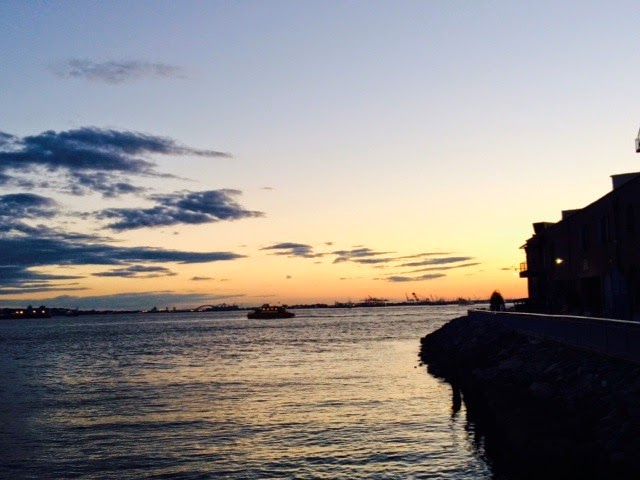
Sunset from Red Hook Winery, BK
So, Wineaux, there you have it—the current Scholium release, "The Complete Summer Selection," which will be ready for delivery in October. I look forward to the wines I have coming, and hope to hear from you if you too are are a fan of the Scholium Project. And as always, I continue to support inventive and daring winemakers around the globe, so hurry back soon Abe, and bring more wines for us "crazy-man-wine-club" members to try!

Cheers.


(ADDENDUM: As I was working on this article, news filtered in about the earthquake in Napa—with many winemaker friends in the area, I reached out with concern. While all people I know are fine, one winemaker lost her total inventory save for what she could salvage from a few broken barrels. Another winery I know suffered catastrophic damage to its historic tasting room. Maybe it's not pouring ice water over your head, but please help support the cleanup and rebuilding of one of our nation's most iconic wine regions by drinking Napa wine, tweeting with #NapaStrong, and supporting these winemakers by buying more Napa wine, like Scholium.)

Tuesday, August 20, 2013

SAYING 'SHALOM' TO ISRAELI WINES

The Minx is finding this a banner summer for exploring less-familiar wine regions: first Turkey, now Israel! You, dear reader, may already be acquainted with quality wines from Israel... but the majority of Wineaux are not, and there are a few reasons for this.

First of all, Israel lacks a defining grape or signature region that jumps out to make an easy association.

Unlike, say, the Bekaa Valley in Lebanon (which is known for growing Cabernet Sauvignon with an identifiable terroir tang,) Israel's wine regions grow many international varieties well.  Both Chardonnay and Sauvignon Blanc thrive, along with Riesling, Viognier and Gewürztraminer for the whites.  For reds, Cabernet Sauvignon, Merlot, and Syrah all produce many quality wines, and there is increased experimentation with Carignan and Petite Sirah.  In addition, a few indigenous grapes like Argaman (cross of Carignan and Portugal's Souzao) and Emerald Riesling round out the wide array.  Not to mention, wine is grown in nine major spots, from the northern Golan Heights region all the way south to the Negev, in a country roughly the size of New Jersey.

Israel also does not have to adhere to wine laws like many other countries in terms of appellation rules, so they are free to experiment in their vineyards.  While this is potentially a positive situation, it adds to the muddle.  Luckily, advances in technology are helping overall quality rise, so Israeli winemakers are starting to work towards defining a clearer Israeli wine identity.

But... they are also fighting "the 'K' word."

People often associate Israeli wines with lower-quality kosher offerings, which couldn't be farther from reality.  Not all Israeli wine is kosher, in fact, 80-90% of local winemakers are not even Sabbath observant. Winemakers from Israel will tell you that the biggest challenge they face is getting their wines out of the kosher section of the wine store... into the WINE section.  While Israel arguably makes the highest-quality kosher wines out there, detaching the labeling from the wine's level of excellence is another hurdle.

Israel is ripe for becoming a major player in the international wine arena, even with these obstacles.  There are many boutique wineries and self-trained winemakers, they don't hesitate to bring in experienced foreigners or send their youngsters out for training, they are looking to reduce yields for higher quality and they are experimenting with interesting blends.

Perhaps out of all of this, Israel's wine identity will start to take a sharper focus.  Until then, keep your eyes out for some of the following amazing Israeli wines and ponder Israel's wine identity for yourself!

2009 Barkan Wine Cellars Altitude +720
100% Cabernet Sauvignon; Galilee.  Great fruit and cedar nose, intoxicating, chewy, cheeky, approachable. ~$46

2011 Carmel Winery Kayoumi White Riesling
Galilee.  Water-white color, honeysuckle, hint of petrol.  Light acid, great character.  Yum! ~$24

2009 Carmel Winery Mediterranean
27% Carignan, 27% Shiraz, 27% Petit Verdot, 15% Petite Sirah, 3% Malbec, 1% Viognier; Galilee. Earth and spice.  Very, very soft finish with good fruit.  Quaffable.  ~$50

2009 Carmel Winery Sha'al Gewürztraminer
Galilee.  Single vineyard, late harvest - spice, florals, not overly sweet, good acid... great for food pairing!  ~$22/375ml

2012 Dalton Winery Rosé
Blend of Barbera, Cabernet Sauvignon and Syrah.  Unusual wow-nose of floral perfume.  Good acidity. Very yummy - great fruit, great length. ~$17
My notes are for the '10 - the
'11 is becoming available too.

2010 Dalton Winery Petite Sirah
Incredible nose!  Very dense; licorice, charcoal, blueberry liqueur.  Very, very nice. ~$22


2010 Domaine du Castel Grand Vin
Blend of Cabernet Sauvignon, Merlot and Petit Verdot; Judean Hills.  Cedar, earth, cassis.  Mouth-painting with lovely violet and red fruit notes.  Mmmmm.  ~$65

2007 Ella Valley Vineyards Merlot
Merlot with some Cabernet Sauvignon; Judean Hills.  Oak, dirt, terroir, little funk.  Soft tannins, though grippy in mouth.  Bright fruit, good structure. ~$30

2010 Flam Winery Cabernet Sauvignon Reserve
85% Cabernet Sauvignon, 8% Merlot, 6% Cabernet Franc, 3% Petit Verdot; Upper Galilee.  Earth, cherry-berry.  Loads going on!  Well-structured, great length and fruit.  ~$59

2010 Galil Mountain Winery Pinot Noir
Upper Galilee.  Very light in color.  Earthy nose, quite interesting with good elements but very lightly styled.  ~$20

2008 Golan Heights Winery Yarden Pinot Noir
Northern Golan Heights. Lots of floral perfume and earth.  Chewy fruit.  Very nice.  ~$16

2010 Gvaot Winery Herodion Cabernet Sauvignon
92% Cabernet Sauvignon, 8% Merlot; Shomron.  Bright berry color.  Nice round fruit, some earthiness, good acid.  Very pleasant wine.  ~$40

2005 Hevron Heights Winery Jerusalem Heights
Pretty even Cabernet Sauvignon/Merlot blend; Judean Hills.  Terroir, red cherry juice! Fairly soft and light but quaffable with supple tannins.  ~$33

2011 Recanati Winery Ltd. Carignan
Upper Galilee.  Pungent nose - loads of red and black fruits.  Nice florals on finish.  Very good!  And tasty - it keeps drawing you back.  ~$48

2009 Carmei Zvi Segal Bros. Segal's Single Vineyard Dovev Argaman
100% Argaman; Galilee.  I sought out this 'indigenous' grape to try it; this was earthy with lavender florals and black fruits.  Somewhat one-dimensional in the mouth, but brightly styled and interesting.  ~$36

2012 Teperberg Winery 1870 Terra Sauvignon Blanc
Shomron.  Grassy with tropical fruit, great acid, very nice elements and good length.  ~$18

2010 Teperberg Winery 1870 Terra Malbec
Judean Hills.  1st Malbec in Israel, I believe - very dark berries on the nose.  Soft and smooth.  Good for people who like lighter-styled wines with a rich flavor. ~$31

2010 Tzora Vineyards Misty Hills
55% Cabernet Sauvignon, 45% Syrah; Judean Hills.  Loads of cedar and cassis.  Spicy, a bit harsh in the mouth - needs food and/or a little time.  ~$60


A huge thank you to "Wines of Israel - Mediterranean Inspiration" for hosting a mini-wine tour, a discussion of modern Israeli winemaking with Josh Wesson and Alex Haruni, and a walk-around tasting.   My eyes were certainly opened, and I hope you venture out to try some wonderful Israeli wines soon. Cheers!